Processing Meat at Enormous Scale — The Automation Behind America's Largest Food Sector
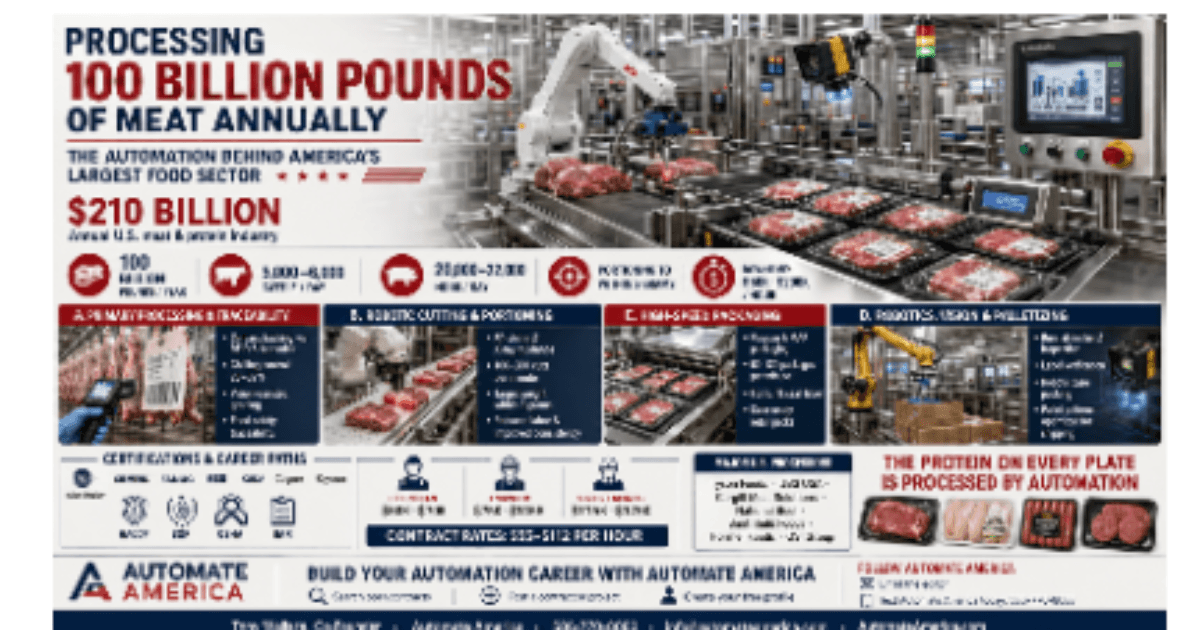
Meat processing and protein manufacturing is the largest sector of the US food industry, processing beef, pork, chicken, turkey, and processed meat products at enormous scale. A modern beef processing plant slaughters and fabricates 5,000 to 6,000 head of cattle per day, converting live animals into primal cuts, subprimals, ground beef, and case-ready retail packages in a continuous flow that moves carcasses through chilling, grading, cutting, deboning, trimming, grinding, portioning, and packaging stations. A large pork processing plant processes 20,000 to 22,000 hogs per day. The automation push in meat processing has accelerated dramatically since 2020, driven by chronic labor shortages, worker safety concerns, food safety regulation, and the economics of running facilities where a single hour of downtime is very costly. Robotic cutting, automated portioning, vision-guided trimming, and high-speed packaging systems are replacing manual labor at every stage of production.
The US meat processing industry is concentrated among major integrators. Tyson Foods (Springdale AR, 120,000+ US employees) is the largest US meat processor, operating over 100 production facilities processing beef, pork, chicken, and prepared foods. JBS USA (Greeley CO, 66,000 US employees, Brazilian-based JBS S.A. subsidiary) operates beef plants in Greeley CO, Grand Island NE, Hyrum UT, Plainwell MI, and Souderton PA, plus pork operations under the Swift and Pilgrim's Pride brands. Cargill Meat Solutions (Wichita KS, 20,000+ US employees) processes beef at plants in Dodge City KS, Fort Morgan CO, Schuyler NE, and Friona TX, and operates protein businesses in turkey, egg, and value-added meats. National Beef Packing (Kansas City MO, Marfrig subsidiary) runs plants in Liberal KS, Dodge City KS, and Tama IA. Smithfield Foods (Smithfield VA, WH Group subsidiary) is the world's largest pork processor, operating plants in Smithfield VA, Tar Heel NC (the world's largest pork processing plant at 32,000 hogs per day capacity), Sioux Falls SD, Milan MO, and Clinton NC. Hormel Foods (Austin MN) produces Spam, Jennie-O Turkey, Applegate, and Natural Choice brands. OSI Group (Aurora IL) supplies McDonald's, producing hamburger patties at plants across the US.
Robotic Cutting, Vision-Guided Portioning, and High-Speed Packaging
Primary processing automation manages the kill floor through fabrication operations that convert carcasses into primal and subprimal cuts. Automated hide removal systems, carcass splitting saws, and evisceration equipment from Jarvis Products (Middletown CT), Frontmatec (Kolding Denmark), and Marel (Gardabaer Iceland) improve throughput and worker safety. USDA grading is increasingly augmented by automated vision-based grading systems that evaluate marbling, rib eye area, fat thickness, and lean maturity using cameras and machine learning algorithms. Carcass tracking systems using RFID tags and barcode labels from Zebra Technologies (Lincolnshire IL) trace individual animals through every processing step for food safety traceability. Chilling automation controls the 24 to 48 hour post-slaughter cooling process that brings carcass temperature from 100 degrees Fahrenheit to 28-32 degrees in blast chillers and aging coolers, with precise temperature and humidity control to manage shrinkage, tenderness development, and food safety. Pay for primary processing automation engineers and USDA traceability system engineers depends on experience, the employer and the region.
Further processing and portioning is where the automation revolution is most visible. Robotic cutting systems from Marel (the Marel SensorX and I-Cut portioning systems), JBT Corporation (Chicago IL, formerly John Bean Technologies), and Scott Technology (Dunedin New Zealand) use 3D vision, X-ray scanning, and force sensors to precisely cut steaks, chops, and portions to target weight within 2 grams at speeds of 100 to 200 cuts per minute. X-ray bone detection systems from Marel, Anritsu (Morgan Hill CA), and Eagle Product Inspection (Tampa FL) scan every piece of meat for bone fragments at line speeds. Thermoforming packaging machines from Multivac (Kansas City MO, Germany-based), ULMA Packaging (Woodstock GA, Spain-based), and Harpak-ULMA create vacuum-sealed or modified atmosphere packages for retail and food service. Case-ready packaging lines produce the consumer-ready packages consumers see in grocery meat departments, running 60 to 120 packages per minute through forming, filling, sealing, labeling, and case packing. Robotic palletizing systems from FANUC, ABB, and KUKA stack cases onto pallets in patterns optimized for truck loading. Pay for portioning automation engineers and packaging automation engineers depends on experience, the employer and the region.
Certifications and Meat Processing Career Paths
Meat processing automation careers require process control expertise combined with food safety knowledge and increasingly, robotics and machine vision skills. Allen-Bradley (Rockwell Automation) certifications are essential because ControlLogix and CompactLogix PLCs control the majority of US meat processing automation — from kill floor equipment to packaging lines. Siemens S7-1500 certifications cover European-origin equipment from Marel, Frontmatec, and Multivac. FANUC, ABB, and KUKA robotics certifications apply to robotic cutting, palletizing, and material handling cells. Cognex and Keyence vision system training covers portion cutting guidance, defect detection, and grading systems. The American Meat Science Association (AMSA, Champaign IL) provides educational resources and the Reciprocal Meat Conference. The North American Meat Institute (NAMI, Washington DC) offers the HACCP training curriculum recognized by USDA-FSIS. SQF (Safe Quality Food) practitioner certification is standard across the industry. OSHA certifications are mandatory with emphasis on lockout/tagout for processing equipment, ammonia refrigeration safety (IIAR), and personal protective equipment in slaughter operations. Pay for entry-level meat processing automation technicians, mid-career portioning and packaging engineers and senior engineers managing plant-wide meat processing automation depends on experience, the employer and the region. Contract rates are set by each contract and shown before anyone applies.
The Protein on Every Plate Is Processed by Automation
The conversion of live animals into safe, inspected, precisely portioned, and attractively packaged meat products is one of the most complex automation challenges in food manufacturing. Chronic labor shortages, food safety requirements, and the economic pressure of razor-thin margins drive constant investment in robotic cutting, vision-guided portioning, and high-speed packaging automation. Automate America connects meat processing automation professionals with the companies producing the protein that feeds America.
Build Your Automation Career With Automate America
Ready to put meat and protein processing automation skills to work? Search open hourly automation contracts, post a contract or project, or create your free Automate America profile to get matched with work. Hiring teams can search skilled professionals and connect with customers and end users nationwide. Explore related career paths for controls engineers, quality engineers, automation engineers.
Industry training, standards & news
- Training & certification: ISA automation & control certification, Rockwell Automation (Allen-Bradley) PLC training.
- Industry news: The National Provisioner and Food Engineering.
- Standards & workforce: NIST Manufacturing Extension Partnership and The Manufacturing Institute.
Related reading on Automate America
- Pet Food & Animal Feed Automation Careers
- Dairy Processing Automation Careers
- Sugar Refining & Confectionery Automation Careers


Tony Wallace, Co-Founder · Automate America · 586-770-8083 · info@automateamerica.com