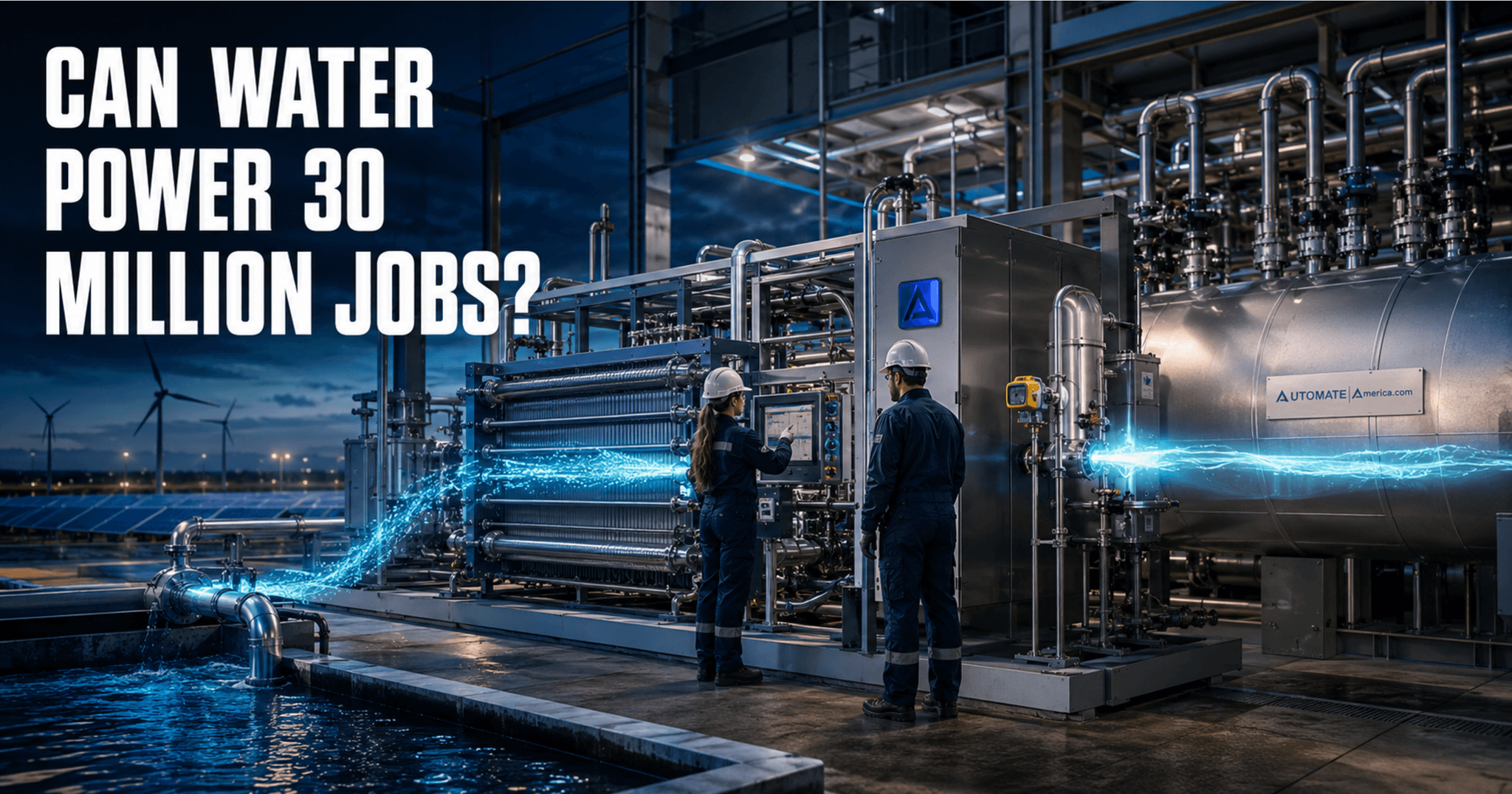
The Manufacturing Boom Behind the Clean Energy Transition
The United States is experiencing the largest buildout of renewable energy manufacturing capacity in its history. Driven by the Inflation Reduction Act's domestic content requirements and production tax credits, companies are investing tens of billions of dollars in new factories that produce solar panels, wind turbine components, battery cells, inverters, and energy storage systems on American soil. According to the American Clean Power Association, clean energy investment announcements surged in the year after the Inflation Reduction Act passed in August 2022.
Each of these factories requires sophisticated automation systems designed, installed, and maintained by skilled professionals. For automation engineers and technicians, renewable energy manufacturing represents one of the most exciting and fastest-growing career opportunities of the decade, combining the technical challenges of advanced manufacturing with the purpose-driven satisfaction of contributing to the clean energy transition.
Solar Panel Manufacturing Automation
Solar photovoltaic (PV) module manufacturing involves a multi-step process that demands extreme precision and cleanliness. Automation systems control every stage from silicon wafer handling through cell processing to final module assembly and testing.
Cell Production: Solar cell manufacturing takes place in cleanroom environments where automated equipment handles fragile silicon wafers through texturing, diffusion, anti-reflective coating, metallization, and firing processes. Equipment from companies like Meyer Burger, Hanwha Q Cells, and First Solar uses PLCs, motion controllers, and vision systems to maintain the tight tolerances that determine cell efficiency. A single percentage point improvement in cell efficiency can represent millions of dollars in additional energy output over a panel's 25-year lifetime.
Module Assembly: Automated stringing machines solder cells together into strings, layup systems arrange cells with encapsulant and backsheet materials, laminators bond the assembly at high temperature and vacuum, and framing machines attach aluminum frames. Each step requires precise temperature, pressure, and alignment control. Robotic material handling systems move panels between stations without damaging the delicate glass surfaces.
Quality Testing: Every module undergoes automated electroluminescence (EL) imaging, flash testing to verify power output, and high-potential (hipot) safety testing before shipping. Vision inspection systems identify microcracks, soldering defects, and cosmetic issues. Data from these systems feeds into manufacturing execution systems (MES) that track every panel from raw material to finished product.
Wind Turbine Component Manufacturing
Wind turbine manufacturing covers blade production, nacelle assembly, tower fabrication, and generator manufacturing, each with distinct automation requirements.
Blade Manufacturing: Wind turbine blades up to 100 meters long are manufactured using automated fiber placement, resin infusion, and CNC trimming systems. Robotic surface finishing and coating systems apply protective layers that must withstand decades of environmental exposure. Non-destructive testing (NDT) systems using ultrasound and thermography inspect composite layups for voids and delamination. The sheer scale of these components creates unique automation challenges.
Nacelle and Drivetrain Assembly: The nacelle houses the generator, gearbox (if present), yaw system, and control electronics. Automated torque systems tighten critical bolted connections to precise specifications. Robotic welding systems fabricate structural components. Test benches validate drivetrain performance under simulated load conditions before field installation.
Tower Fabrication: Steel tower sections are manufactured using automated plate rolling, longitudinal and circumferential welding, shot blasting, and coating systems. Welding automation is particularly critical because tower welds must meet stringent fatigue life requirements. Robotic welding systems using tandem wire or submerged arc processes produce consistent, high-quality welds at production speeds.
Battery and Energy Storage Manufacturing
Battery cell and pack manufacturing for grid-scale energy storage and electric vehicles is arguably the most automation-intensive segment of the renewable energy supply chain. Companies like Panasonic, LG Energy Solution, Samsung SDI, and numerous startups are building gigafactories across the United States.
Cell Manufacturing: Lithium-ion cell production involves electrode coating, calendering, slitting, stacking or winding, electrolyte filling, and formation cycling. Each step operates in dry rooms with extremely low humidity, requiring specialized HVAC automation. Process control tolerances are measured in microns, and contamination control is as rigorous as semiconductor manufacturing.
Pack Assembly: Battery pack assembly lines use robotic welding (laser and ultrasonic), automated testing, thermal management system installation, and final pack validation. Battery management system (BMS) programming and calibration is performed at end of line. Safety interlocks and hazard monitoring systems protect workers from high-voltage and thermal runaway risks.
Career Opportunities and Compensation
Renewable energy manufacturing offers competitive salaries enhanced by the sector's rapid growth and the scarcity of experienced automation professionals willing to relocate to new factory locations.
Controls Engineer (Solar/Wind/Battery): Programs PLCs, configures HMIs, and commissions automated production equipment. Experience with Siemens, Beckhoff, or Allen-Bradley platforms is most common. Many positions involve equipment startup and optimization during factory ramp-up phases. Pay at this level depends on experience, the employer and the region.
Robotics Engineer: Integrates, programs, and maintains robotic systems for material handling, welding, inspection, and assembly. FANUC, ABB, KUKA, and Universal Robots are the primary platforms.
MES/Data Engineer: Implements manufacturing execution systems that track production, quality, and equipment performance. Experience with Siemens Opcenter, Rockwell Plex, or custom MES platforms is valued. Data engineering skills for production analytics and predictive maintenance add significant value. Pay at this level depends on experience, the employer and the region.
Process Engineer (Battery): Optimizes electrode coating, formation cycling, or pack assembly processes using statistical process control and designed experiments. Combines chemical engineering or materials science knowledge with automation skills.
Commissioning Specialist: Travels to new factory sites to install, start up, and validate automated production equipment. High demand during the current factory buildout phase. Requires broad technical skills and willingness to travel extensively. Traveling roles usually carry a per diem.
Geographic Hotspots
Renewable energy manufacturing is concentrating in several regions across the United States. Georgia has attracted major solar and battery investments from Hanwha Q Cells, SK Innovation, and Hyundai. Ohio and Michigan are becoming battery manufacturing hubs with plants from LG Energy Solution, Honda-LG, and Ultium Cells. Texas and Colorado are seeing wind turbine component manufacturing growth. Nevada hosts Tesla's original Gigafactory and multiple lithium processing operations. Kansas, Indiana, and South Carolina have attracted additional solar and wind manufacturing investments.
Many of these factories are located in smaller communities where cost of living is lower than major metropolitan areas, meaning that competitive salaries stretch further. Housing costs, commute times, and overall quality of life can be significantly better than in traditional industrial centers.
Getting Started
Breaking into renewable energy manufacturing automation requires the same foundational skills as any automation career: PLC programming, electrical troubleshooting, mechanical aptitude, and networking knowledge. What makes candidates stand out is enthusiasm for the clean energy mission and willingness to relocate to where new factories are being built.
Training programs specifically targeting renewable energy manufacturing are emerging at community colleges and technical schools near major factory sites. Industry organizations like the American Clean Power Association and the Solar Energy Industries Association offer networking and professional development resources.
Automate America connects skilled automation professionals with renewable energy manufacturers, equipment suppliers, and system integrators building the clean energy supply chain. Whether you are an experienced controls engineer looking for a purposeful career move or a recent graduate entering the workforce, renewable energy manufacturing offers exceptional opportunities to build technology that matters.
FOLLOW AUTOMATE AMERICA


✉ Email the editor·💬 Text Automate America: 586-770-8083
Tony Wallace, Co-Founder · Automate America
Text first: 586-770-8083 or call·info@automateamerica.com