The Maritime Industry's Automation Revolution
The United States maritime industry is experiencing an automation transformation driven by the convergence of a massive naval shipbuilding program, commercial vessel modernization, offshore wind energy development, and the persistent shortage of skilled maritime workers. The U.S. Navy's 30-year shipbuilding plan calls for a fleet of over 350 manned ships plus a constellation of unmanned surface and underwater vehicles. Huntington Ingalls Industries (Newport News Shipbuilding and Ingalls Shipbuilding), General Dynamics (Bath Iron Works, NASSCO, and Electric Boat), and Austal USA are the primary naval shipbuilders, and all are investing billions in shipyard automation to improve production efficiency and address labor shortages that threaten their ability to execute the Navy's construction schedule.
Commercial shipyards are similarly automating. Philly Shipyard (now Hanwha Ocean USA) and Fincantieri Marinette Marine are building next-generation vessels with significantly higher automation content than previous generations. The cruise line industry continues ordering ships with sophisticated automation systems for propulsion management, HVAC, safety systems, passenger entertainment, and hotel management. The offshore wind energy sector is creating demand for specialized installation vessels, service operation vessels, and crew transfer vessels — all heavily automated. Every one of these ships requires automation engineers and technicians during construction, during commissioning, and throughout its operational lifetime.
Shipyard Automation: Building Ships with Robots and Controls
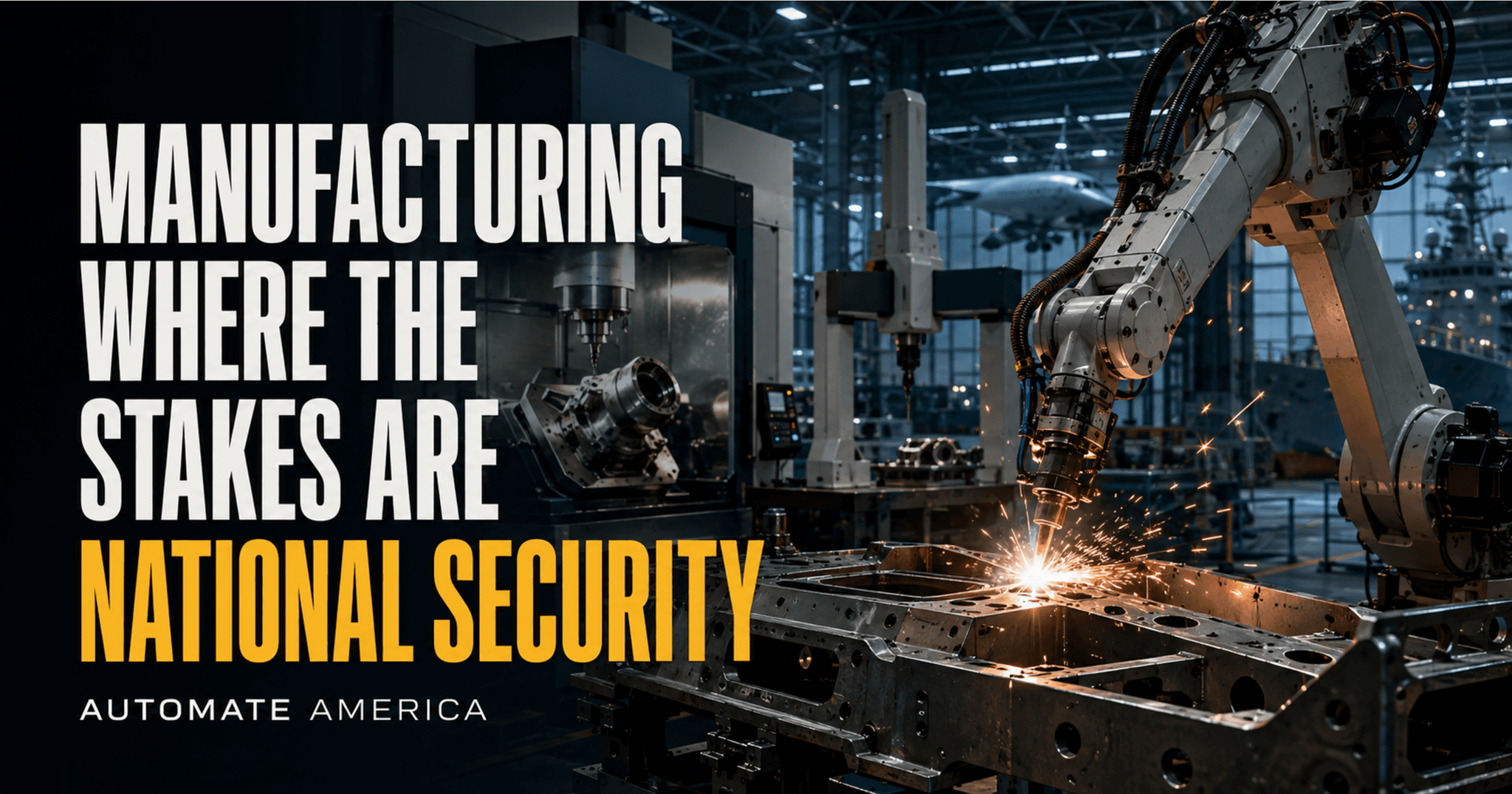
Modern shipyards use automation across the construction process. Steel cutting is performed by CNC plasma and laser cutting machines that process plates weighing several tons into the precise shapes needed for hull sections. Robotic welding systems from FANUC, Lincoln Electric, and ESAB handle structural welding tasks including butt welds, fillet welds, and complex groove welds on subassemblies. Panel lines automate the fabrication of flat and curved hull panels with integrated stiffeners. Pipe fabrication shops use automated cutting, bending, and welding equipment to produce the miles of piping that run through a modern warship or commercial vessel.
Shipyard controls engineers program and maintain these production automation systems, working with PLCs (predominantly Allen-Bradley and Siemens), CNC controllers (FANUC, Hypertherm), robotic welding systems, and material handling equipment including overhead cranes, transporters, and automated guided vehicles (AGVs). The challenge of shipyard automation is the combination of heavy industrial scale, harsh environmental conditions (outdoor work, saltwater exposure, extreme temperatures), and the complexity of building one-of-a-kind or small-batch products rather than mass production items.
Digital shipbuilding initiatives at major yards are introducing 3D modeling integration (using Siemens NX, AVEVA Marine, or ShipConstructor), digital twins for production planning, IoT sensor networks for production tracking, and augmented reality systems for installation verification. Engineers who bridge the gap between traditional shipyard automation and these digital technologies are in high demand.
Shipboard Automation: The Systems Inside the Vessel
A modern naval combatant or commercial vessel contains automation systems rivaling a small industrial plant. The propulsion control system manages main engines (diesel, gas turbine, or diesel-electric/hybrid), gearboxes, shaft systems, and propulsors. For vessels with electric propulsion — increasingly common on cruise ships, offshore support vessels, and the latest naval designs — the power management system controls generators, switchboards, transformers, variable frequency drives, and propulsion motors to maintain electrical stability and optimal fuel efficiency.
Auxiliary systems automation covers HVAC (serving hundreds of compartments with different temperature and humidity requirements), freshwater generation (reverse osmosis desalination), fuel transfer and purification, ballast water management, bilge and wastewater treatment, fire detection and suppression, and damage control systems. Each of these systems has its own control hardware (PLCs, dedicated controllers, or integrated platform management system modules) and contributes to the overall vessel automation architecture.
The integrated platform management system (IPMS) or vessel management system (VMS) ties all shipboard automation together into a unified monitoring and control platform. Major IPMS vendors include Kongsberg (K-Chief and K-Bridge systems), ABB Marine (Ability Marine OCTOPUS), Rolls-Royce/Kongsberg (for naval applications), and L3Harris (for U.S. Navy programs). IPMS engineers design, configure, test, and commission these systems, requiring skills that span SCADA/HMI development, PLC programming, network engineering, and deep understanding of marine engineering systems.
Technical Skills for Marine Automation
Marine automation combines standard industrial controls skills with maritime-specific knowledge. PLC programming (Allen-Bradley, Siemens, ABB, and Kongsberg platforms) forms the foundation. Network engineering skills are critical because shipboard automation networks must operate reliably in an environment with electromagnetic interference from radar and communications systems, physical vibration, and (on naval vessels) the requirement to survive shock events. Understanding Ethernet/IP, PROFINET, Modbus TCP, and NMEA 2000 (the maritime data network standard) is essential.
Instrumentation skills apply directly: temperature sensors throughout the engineering plant, pressure transmitters on steam and hydraulic systems, flow meters on fuel and cooling water systems, level sensors on tanks, and vibration sensors on rotating machinery all require calibration, maintenance, and integration with the control system. Marine-specific instruments include draft sensors, hull stress monitoring systems, weather stations, and navigation sensors (GPS, gyrocompass, speed log, echo sounder) that feed data into both the navigation system and the IPMS.
Cybersecurity is increasingly critical for maritime automation. The International Maritime Organization (IMO) now requires cyber risk management in ship safety management systems. Classification society rules from DNV, Lloyd's Register, Bureau Veritas, and ABS include cybersecurity requirements for vessel automation systems. Engineers who understand both OT security and maritime operations are exceptionally valuable.
Certifications and Education
Naval architecture and marine engineering programs at universities like the University of Michigan, MIT, Webb Institute, SUNY Maritime College, and the U.S. Merchant Marine Academy provide the strongest educational foundation for marine automation careers. Electrical engineering and controls engineering degrees are equally applicable with supplementary maritime knowledge. The Society of Naval Architects and Marine Engineers (SNAME) offers professional development courses. Classification societies (ABS, DNV, Lloyd's Register) provide training on their rules and standards for marine automation systems.
For technicians, the Navy's enlisted rates in Interior Communications Electrician (IC), Electrician's Mate (EM), and Gas Turbine Systems Technician (GSE/GSM) provide outstanding automation training that transfers directly to civilian shipyard and marine engineering careers. The USCG license (for those working aboard commercial vessels) demonstrates maritime competency that employers value.
Pay and Career Progression
Pay rises from shipyard automation technicians, who often work overtime during production surges, through shipyard controls engineers and naval shipyard engineers at Huntington Ingalls, General Dynamics, or government shipyards (Norfolk Naval Shipyard, Puget Sound Naval Shipyard), who carry federal benefits as government employees, to IPMS engineers at Kongsberg, ABB Marine, or L3Harris and senior marine automation engineers and project leads. Sea-going automation officers (electro-technical officers or systems engineers aboard ships) have the benefit of tax-advantaged maritime income and months of leave between deployments.
Contract rates for marine automation specialists are set by each contract and shown before anyone applies; nuclear-qualified personnel and those with active security clearances are in particular demand.
Where the Jobs Are
The major shipbuilding centers are Newport News, Virginia (Huntington Ingalls, building aircraft carriers and submarines), Groton, Connecticut (General Dynamics Electric Boat, submarines), Bath, Maine (Bath Iron Works, destroyers), Pascagoula, Mississippi (Ingalls Shipbuilding, amphibious ships and destroyers), Mobile, Alabama (Austal USA, littoral combat ships), and San Diego, California (NASSCO, logistics ships and commercial tankers). Marinette, Wisconsin (Fincantieri, frigates) is a growing center. Philadelphia (Hanwha/Philly Shipyard) builds commercial vessels.
Marine equipment companies with major U.S. operations include Kongsberg (Houston, TX and several port cities), ABB Marine (Houston), Rolls-Royce (various locations), Wartsila (Houston, Fort Lauderdale), and numerous defense contractors. Ship repair yards in every major port city (Norfolk, San Diego, Pearl Harbor, Jacksonville, Bremerton) employ automation technicians and engineers for modernization and maintenance work.
Getting Started
Industrial automation professionals can transition into marine automation by learning maritime-specific systems and standards. Your PLC, SCADA, and instrumentation skills transfer directly; the learning curve involves understanding shipboard power distribution, propulsion systems, and classification society requirements. Veterans with Navy or Coast Guard engineering experience have a significant advantage. Automate America connects automation professionals with shipyards, marine equipment companies, and vessel operators seeking controls and automation talent for new construction, modernization, and maintenance programs.
FOLLOW AUTOMATE AMERICA


✉ Email the editor·💬 Text Automate America: 586-770-8083
Tony Wallace, Co-Founder · Automate America
Text first: 586-770-8083 or call·info@automateamerica.com