Why Medical Device Manufacturing Pays Premium Rates for Automation Talent
Medical device manufacturing is one of the most demanding and highest-paying sectors for automation professionals. The combination of FDA regulatory oversight, extreme precision requirements, cleanroom environments, and zero-defect quality expectations creates a need for engineers and technicians who bring both strong automation fundamentals and meticulous attention to validation and documentation. Virtually every medical device — from surgical instruments and implantable pacemakers to diagnostic equipment and drug delivery systems — is produced using automated manufacturing processes that require skilled professionals to design, validate, and maintain.
What makes medical device automation distinct from general industrial automation is the regulatory framework. Every manufacturing process must be validated under FDA 21 CFR Part 820 Quality System Regulation, and every automated system that affects product quality must undergo Installation Qualification (IQ), Operational Qualification (OQ), and Performance Qualification (PQ) protocols. This validation burden means that medical device automation projects take longer and require more documentation than comparable projects in other industries, which translates directly into higher billable hours and premium compensation for the professionals who do the work.
Automation Systems in Medical Device Production
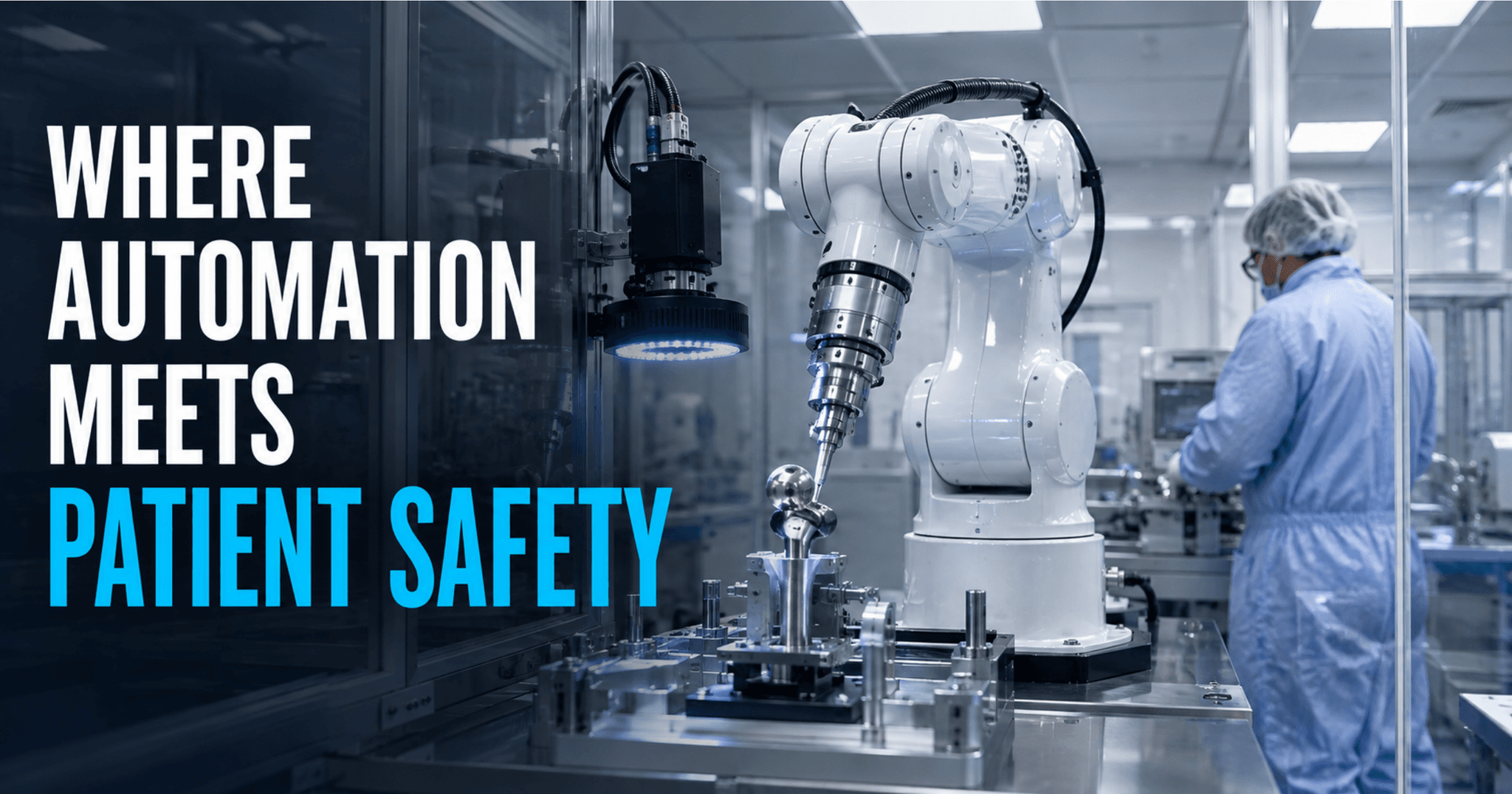
Precision Assembly Robotics: Medical devices often consist of tiny components assembled to tolerances measured in microns. SCARA robots and six-axis robots from FANUC, Epson, and Staubli perform micro-assembly operations including component placement, adhesive dispensing, ultrasonic welding, and laser soldering. These systems operate in ISO Class 7 or Class 8 cleanrooms where particle counts, temperature, and humidity are continuously controlled. Programming these robots requires not just motion control expertise but understanding of cleanroom protocols and contamination prevention.
Vision Inspection and Quality Systems: Every medical device undergoes automated inspection at multiple stages of production. Machine vision systems from Cognex, Keyence, and Basler perform dimensional measurement, surface defect detection, label verification, and barcode reading. Optical coherence tomography (OCT) and X-ray inspection systems examine internal features of assembled devices. Automation engineers configure these systems and develop the inspection recipes that determine pass/fail criteria, working closely with quality engineers to ensure compliance with device master records.
Laser Processing: Laser marking for UDI (Unique Device Identification) compliance is mandatory on most medical devices under FDA requirements. Laser welding joins metal components without thermal distortion. Laser cutting and drilling create precision features in stents, catheters, and surgical instruments. Automation professionals who specialize in laser process integration are particularly valued because the technology requires understanding of both the laser physics and the automation infrastructure surrounding it.
Packaging and Sterilization: Medical device packaging must maintain sterile barriers while enabling easy opening in clinical settings. Automated thermoforming, sealing, and labeling lines produce packaging at high speeds with complete traceability. Sterilization processes using ethylene oxide (EtO), gamma radiation, or electron beam irradiation require automated monitoring and control systems that record every parameter for regulatory compliance.
The Validation Difference: IQ, OQ, PQ
In general manufacturing, you commission an automated system and start production. In medical device manufacturing, commissioning is just the beginning. Every automated system that could affect product quality must undergo a formal three-phase validation protocol. Installation Qualification confirms the equipment was installed correctly per manufacturer specifications. Operational Qualification verifies the system operates within defined parameters across its full range. Performance Qualification demonstrates the system consistently produces acceptable product under actual production conditions.
This validation framework means that automation professionals in medical device manufacturing spend significant time writing and executing qualification protocols, documenting results, and managing change control when any system modification occurs. Engineers who view documentation as an integral part of their work rather than an annoyance thrive in this environment and are rewarded accordingly.
Certifications and Education
While no single certification is universally required, several credentials significantly strengthen a medical device automation career. The Certified Automation Professional (CAP) credential from ISA demonstrates broad automation competency. The Certified Quality Engineer (CQE) from ASQ shows understanding of quality systems relevant to regulated manufacturing. Six Sigma Green Belt or Black Belt certification is common among automation engineers working on process improvement projects. Training in FDA 21 CFR Part 820, ISO 13485 (medical device quality management systems), and IEC 62304 (software lifecycle for medical devices) is essential and often provided by employers or available through organizations like RAPS (Regulatory Affairs Professionals Society).
Educational backgrounds vary. Many successful medical device automation professionals hold associate or bachelor degrees in electrical engineering technology, mechatronics, or automation engineering. Others transition from general industrial automation by gaining medical device experience at contract manufacturers or through staffing platforms that connect automation talent with life sciences companies.
Pay and Career Outlook
Medical device automation asks for regulatory discipline and precision as well as automation skill. Pay rises from entry-level automation technicians, through controls engineers with three to five years of experience and senior automation engineers and validation specialists, to managers and directors of automation engineering at major medical device companies.
Contract work is common. Medical device automation consultants work on validation projects, new line installations, and system upgrades, and each contract posts its rate. Extended contract engagements for new facility builds or major product launches can last six to eighteen months, providing valuable experience.
Major Employers
The medical device industry is concentrated among several major employers and hundreds of specialized contract manufacturers. Medtronic, the world's largest medical device company, employs automation professionals across its cardiac, surgical, and diabetes technology divisions. Abbott, Boston Scientific, Stryker, Becton Dickinson (BD), Johnson and Johnson MedTech, Zimmer Biomet, and Baxter International all maintain significant manufacturing operations in the United States. Contract manufacturers like Jabil Healthcare, Flex, Celestica, and Integer Holdings produce devices for multiple brands and frequently hire automation talent for diverse project work.
Geographic hubs for medical device manufacturing include the Minneapolis-Saint Paul corridor (Medtronic headquarters and dozens of suppliers), the Boston-Cambridge area, Southern California (especially Orange County and San Diego), Northern Indiana (Warsaw, known as the Orthopedic Capital of the World), and the New Jersey-Pennsylvania corridor. However, medical device manufacturing exists in nearly every state, and the industry's growth ensures that new facilities and expansion projects create automation job opportunities nationwide.
Automate America connects automation professionals with medical device manufacturers and contract manufacturers seeking skilled talent for production automation, validation, and continuous improvement projects. The combination of high compensation, intellectually challenging work, and the knowledge that your automation systems contribute to patient health makes medical device manufacturing one of the most rewarding career paths in the automation industry.
FOLLOW AUTOMATE AMERICA


✉ Email the editor·💬 Text Automate America: 586-770-8083
Tony Wallace, Co-Founder · Automate America
Text first: 586-770-8083 or call·info@automateamerica.com