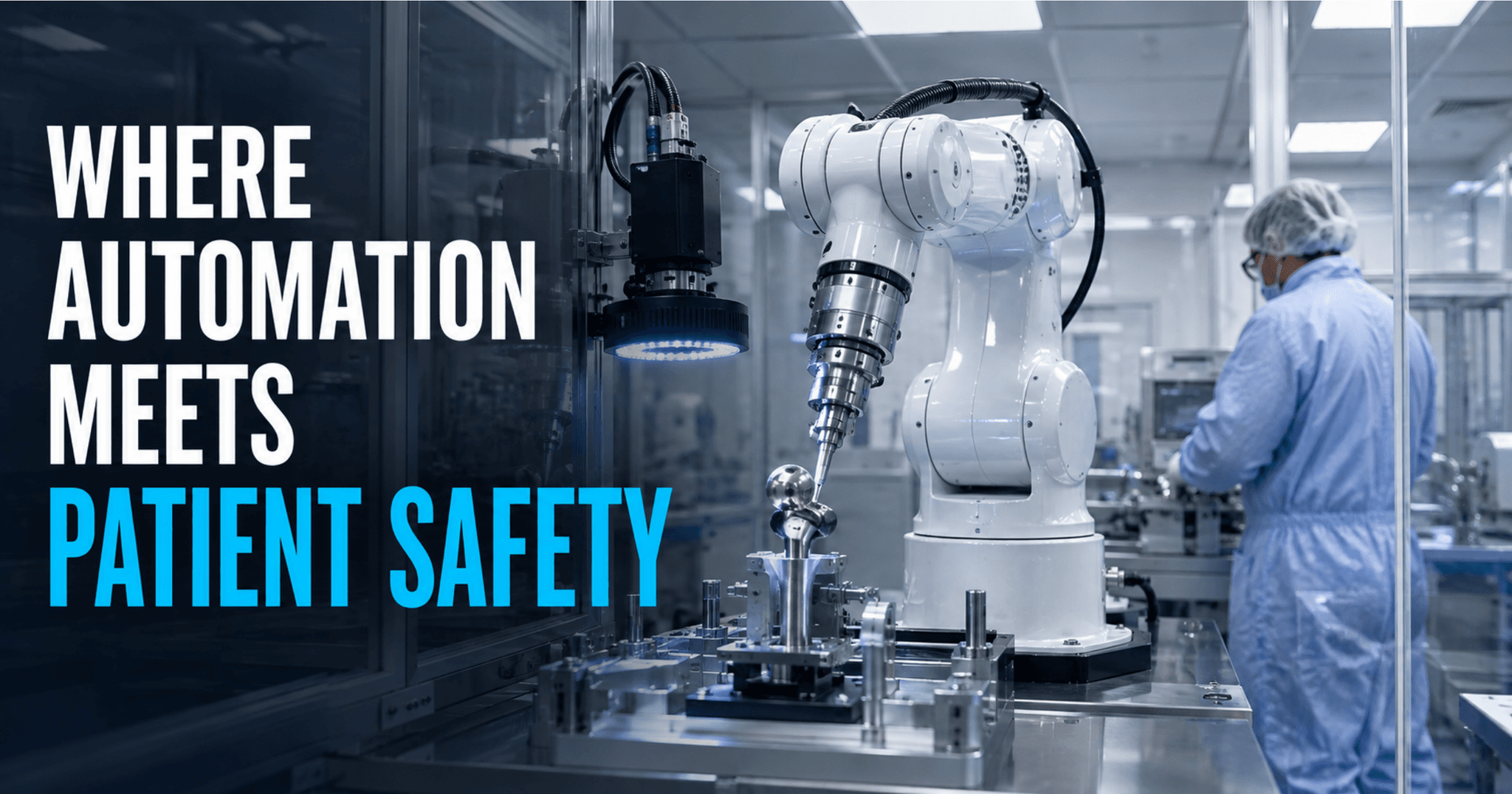
Pharmaceutical manufacturing and food and beverage processing represent two of the fastest-growing segments in industrial automation. Both industries share a critical requirement that sets them apart from general manufacturing: regulatory compliance. Every automated system in a pharma plant must comply with FDA 21 CFR Part 11 for electronic records and signatures. Every food processing line must meet FDA FSMA requirements and USDA HACCP standards. Automation professionals who understand these regulatory frameworks command premium compensation and enjoy exceptional job stability — because compliance requirements never decrease.
Why Regulated Industries Pay More
The salary premium for regulated manufacturing is substantial and well-documented. A PLC programmer with pharmaceutical validation experience and an understanding of GAMP 5 guidelines brings skills a general manufacturing plant does not ask for.
The premium exists because the consequences of errors are enormous. A programming mistake in a pharmaceutical batch reactor could produce contaminated medication that harms patients. A control system failure in a food processing plant could allow pathogen growth that triggers a nationwide recall. The FDA does not accept excuses — they shut down facilities, issue consent decrees, and impose fines that reach hundreds of millions of dollars. Companies pay a premium for automation professionals who understand how to prevent these outcomes.
Pharmaceutical Automation: What You Need to Know
Pharmaceutical automation covers everything from raw material handling and batch processing to packaging, serialization, and warehouse management. The most common automation platforms in pharma are Allen-Bradley ControlLogix and CompactLogix, Siemens S7-1500, and DeltaV DCS (Distributed Control System) from Emerson. Many pharma plants use a combination of PLC-based discrete control and DCS-based process control.
Key Technical Skills for Pharma:
- Batch control programming using ISA-88 (S88) standards — defining recipes, procedures, unit procedures, and phases for batch manufacturing
- 21 CFR Part 11 compliance — implementing electronic signatures, audit trails, access controls, and data integrity measures in automation systems
- GAMP 5 validation — understanding Good Automated Manufacturing Practice guidelines for computer system validation, including IQ/OQ/PQ (Installation, Operational, and Performance Qualification)
- Clean-in-Place (CIP) and Sterilize-in-Place (SIP) automation — programming automated cleaning sequences that meet sanitation requirements
- Serialization and track-and-trace systems — complying with DSCSA (Drug Supply Chain Security Act) requirements for pharmaceutical serialization
- Historian and data management — configuring OSIsoft PI, Wonderware Historian, or similar platforms for GMP-compliant data collection and reporting
Career Levels in Pharma Automation:
Level 1 — Automation Technician: Maintains and troubleshoots existing automation systems in a validated environment. Must follow strict change control procedures — no cowboy programming allowed in pharma.
Level 2 — Controls Engineer: Designs and programs automation systems including batch control, CIP sequences, and HMI screens. Writes and executes validation protocols (IQ/OQ/PQ). Interfaces with quality assurance teams.
Level 3 — Senior Automation / Validation Engineer: Leads automation projects from design through validation. Authors User Requirement Specifications, Functional Design Specifications, and validation master plans. May specialize in CSV (Computer System Validation) or process control.
Level 4 — Principal Engineer / Automation Manager: Sets automation standards for the site or company. Manages automation teams. Interfaces with FDA inspectors during audits. Drives strategic technology decisions.
Food and Beverage Automation
Food and beverage automation shares many similarities with pharma — both deal with consumable products, regulatory oversight, and sanitation requirements — but operates at higher speeds and thinner margins. A pharmaceutical batch reactor might produce a batch every eight hours. A food packaging line might process 1,200 units per minute. Speed, uptime, and efficiency drive everything.
Key Technical Skills for Food and Beverage:
- High-speed packaging line programming — coordinating conveyors, fillers, cappers, labelers, case packers, and palletizers at production rates that demand millisecond-level timing
- HACCP compliance automation — programming critical control points (CCPs) into the automation system, including temperature monitoring, metal detection, checkweighing, and foreign object rejection
- Washdown-rated equipment — understanding IP69K-rated hardware, stainless steel enclosures, and hygienic design principles for equipment that gets pressure-washed daily
- Vision inspection systems — configuring Cognex, Keyence, or SICK vision cameras for label verification, fill level inspection, date code reading, and defect detection
- OEE (Overall Equipment Effectiveness) tracking — implementing automated downtime tracking, production counting, and performance monitoring systems
Certifications That Matter
For pharmaceutical automation, the ISA Certified Automation Professional (CAP) certification carries significant weight. ISPE (International Society for Pharmaceutical Engineering) membership and participation in GAMP committees demonstrates commitment to the field. Specific DCS platform certifications (DeltaV, Yokogawa, Honeywell Experion) are highly valued since many pharma plants use DCS rather than PLC.
For food and beverage, PMMI (The Association for Packaging and Processing Technologies) offers certifications in packaging machinery. SQF (Safe Quality Food) and PCQI (Preventive Controls Qualified Individual) certifications, while primarily quality-focused, are valued in automation professionals who work in food environments because they demonstrate understanding of food safety systems.
Job Market Outlook
The pharmaceutical automation market is booming due to several converging trends: the growth of biologics and cell therapy manufacturing, reshoring of pharmaceutical production to North America after pandemic-era supply chain disruptions, and the increasing complexity of personalized medicine production. The FDA is also pushing for continuous manufacturing — a fundamental shift from traditional batch processing that requires entirely new automation architectures. These trends create sustained demand for automation professionals with pharma experience.
Food and beverage automation demand is driven by labor shortages in food processing plants, consumer demand for product variety (requiring flexible packaging lines), food safety regulations (FSMA compliance), and the growth of ready-to-eat and meal kit products that require complex automated assembly.
Both industries offer recession-resistant employment. People buy food and medicine in every economic climate. During the 2020 pandemic, pharmaceutical and food manufacturing were among the only industries that increased hiring while the rest of the economy contracted.
Getting Started in Regulated Manufacturing
If you have existing PLC or controls engineering experience, the fastest path into regulated manufacturing is to join a systems integrator that serves pharma or food clients. Integrators expose you to multiple facilities, products, and regulatory scenarios in a short time. Two to three years of integrator experience in pharma projects gives you enough validation knowledge to command premium direct-hire or contract rates.
If you are starting from scratch, target your education toward process control rather than discrete manufacturing. Programs that cover ISA-88 batch control, instrumentation, and process control theory prepare you better for regulated environments than programs focused purely on PLC programming and robotics.
Automate America connects automation professionals with pharmaceutical and food manufacturing opportunities. List your regulatory experience, validation credentials, and platform expertise on your profile to match with companies seeking compliance-ready automation talent.
FOLLOW AUTOMATE AMERICA


✉ Email the editor·💬 Text Automate America: 586-770-8083
Tony Wallace, Co-Founder · Automate America
Text first: 586-770-8083 or call·info@automateamerica.com